
Why We Build Ventures (and Why Tekniti AI Just Won a Prize)
Bayseian is a services firm that builds product. Our property compliance venture Tekniti AI just won the Soyoye Entrepreneurship Prize.
Introduction
Most AI consultancies advise. We deliver. And sometimes, when we see a structural gap in a market, we build product into it.
Tekniti AI is one of those bets.
The opportunity
England's Renters' Rights Act has rewritten the rules for roughly 2.3 million landlords and the letting agents who serve them. The legislation introduces 18 classes of compliance obligation, new statutory forms, an expanded penalty regime, and a national property portal. Most of the market is not ready for it, and the tools they currently rely on were built for a simpler regulatory era.
But compliance is only the visible problem. The deeper problem is leverage. Property management today scales linearly: more units means more manual admin, more certificate tracking, more regulatory upkeep, more headcount. That is a broken model, and it is one that AI is unusually well suited to fix.
What Tekniti does
Tekniti AI puts property compliance on autopilot. It monitors regulatory obligations, tracks documentation, flags gaps before they become penalties, and keeps landlords and letting agents audit-ready without requiring a dedicated compliance team. The goal is that a landlord managing fifty units can operate with the same compliance rigour as a managed portfolio with a full back-office, except without the back-office.
For landlords, that means fewer sleepless nights before an inspection. For letting agents, it means the ability to grow their portfolio without growing their overhead at the same rate. For both, it means getting out of the business of compliance administration and back to the business of property.
What we actually built
Under the hood, Tekniti is an operating layer over the fragmented streams a lettings team juggles every day: tenancies, compliance certificates, tenant messages, maintenance requests, payments, inspections, documents. Those streams funnel into three production capabilities:
- •Compliance on autopilot: UK lettings obligations (gas safety, EICR, EPC, deposit protection, Right to Rent) tracked per property, with deadlines flagged and renewals actioned before they lapse, and a full audit trail behind every action.
- •Tenant communications: queries and maintenance requests handled around the clock, drafted, triaged and routed, with escalation to a human on anything sensitive.
- •Operations and oversight: rent, statements, arrears chasing, inspection scheduling and portfolio reporting kept current, with human sign-off where it matters.
The design decisions were the hard part, and they cut against the grain of "full autonomy" AI products:
Humans stay in the loop on consequence. An agent drafting a tenant reply is cheap to correct; a wrongly served statutory notice is not. Every workflow classifies actions by blast radius: routine ones run autonomously, consequential ones queue for approval. This costs some automation percentage and buys the thing that actually matters in a regulated market: trust.
Compliance is the wedge, not the suite. The temptation was to build all of property management at once. We shipped the compliance layer first because it's where the regulatory deadline pressure lives, then let tenant comms and operations grow out of the same data spine.
Audit trail as a first-class feature. Every automated action is logged and traceable. Not because it demos well, but because "show me why the system did that" is the first question a letting agent's compliance officer asks.
Tekniti is built by the same engineers, to the same standards, as our client work, which is exactly the point: the venture and the consultancy sharpen each other.
Routine actions run autonomously; consequential ones queue for human approval.
Prize recognition
On 12 May, Bayseian co-founder Aamir Faaiz pitched Tekniti at the Soyoye Entrepreneurship Prize. The judging panel included Babatunde Soyoye (Co-founder & Managing Partner, Helios Investment Partners, Africa's largest private investment firm, with over $7 billion in completed investments across four continents), Dr. Pahini Pandya (Founder & CEO, Panakeia, an AI pathology company that profiles cancer biomarkers from tissue images in minutes), and Michael Stothard (Partner, Firstminute Capital, a $500m seed fund backed by 130+ unicorn founders, with portfolio companies including Mistral). They assessed on commercial potential, traction, business model, technology, and founder-market fit.
Tekniti AI was named among the winners.
The Soyoye Prize has a meaningful track record. Panakeia, a previous winner and itself a Soyoye alumnus, has raised £7.4 million and reached $2.5 million in annual revenue since winning in 2019. That kind of trajectory is exactly what we are building towards.
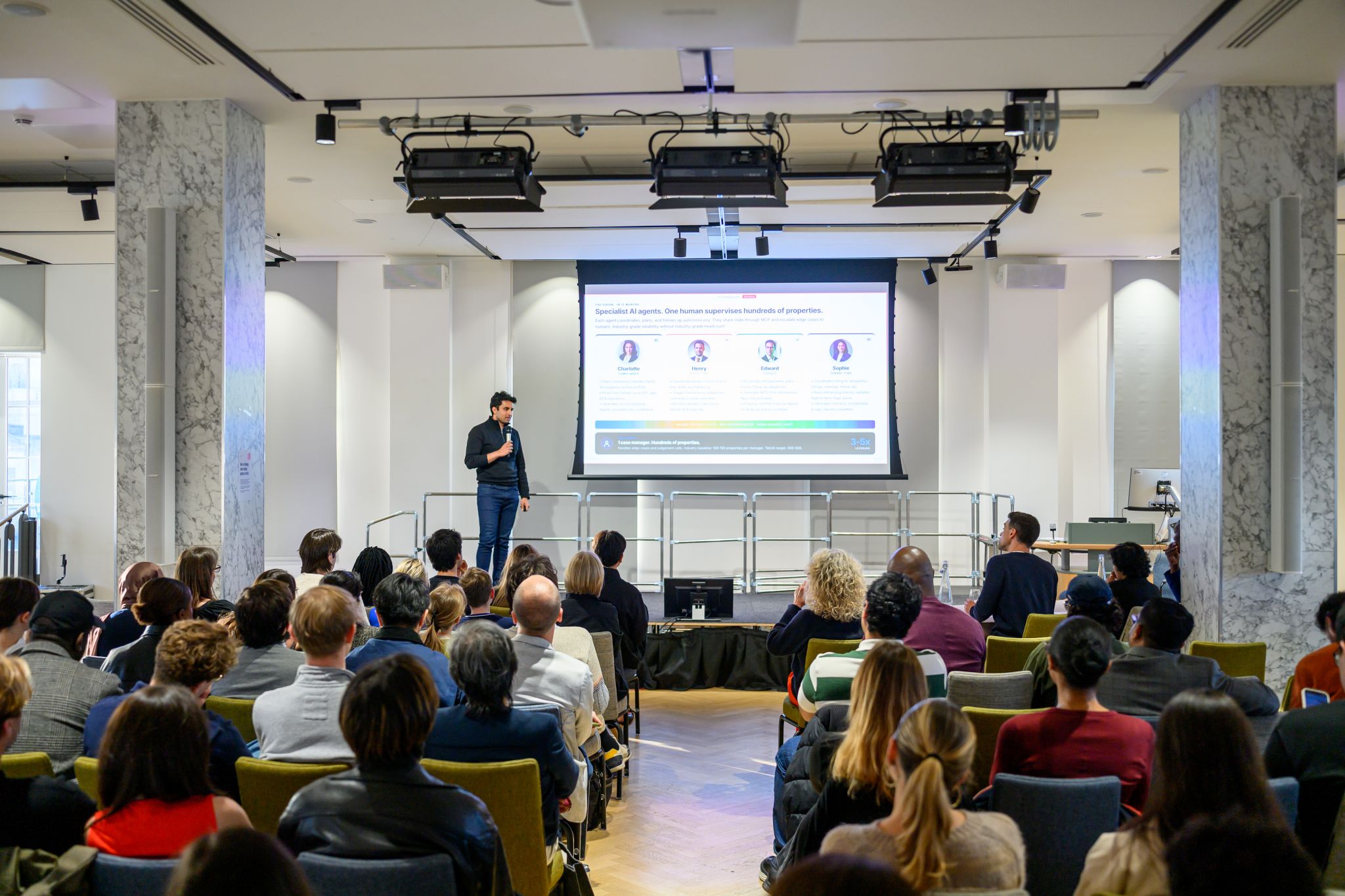
Aamir Faaiz pitching Tekniti AI at the Soyoye Entrepreneurship Prize
Why this matters for Bayseian
Tekniti is not a side project. It is the clearest expression of how we think about venture building from within a services firm. Services revenue funds the R&D, client engagements surface the use cases, and the venture captures the recurring value. We see a market with strong regulatory tailwinds, weak incumbent tooling, and a customer base that is actively looking for a better answer. We build into that gap, using the same delivery muscle and AI engineering capability that powers our client work.
More on Tekniti's progress soon. Read the full announcement or learn more at tekniti.ai.
Bayseian is an AI-native professional services firm operating across the UK, GCC, and Asia-Pacific.
Working on something like this?
No pitch, just a practical conversation with the team that builds and operates these systems in production.
Start a conversation